Priya Talks to a Regular Walker About Film and Slow Town Walks
One of our most frequent walkers explains why a borrowed 35mm camera changes the way he sees a town, and why waiting is part of the pleasure.
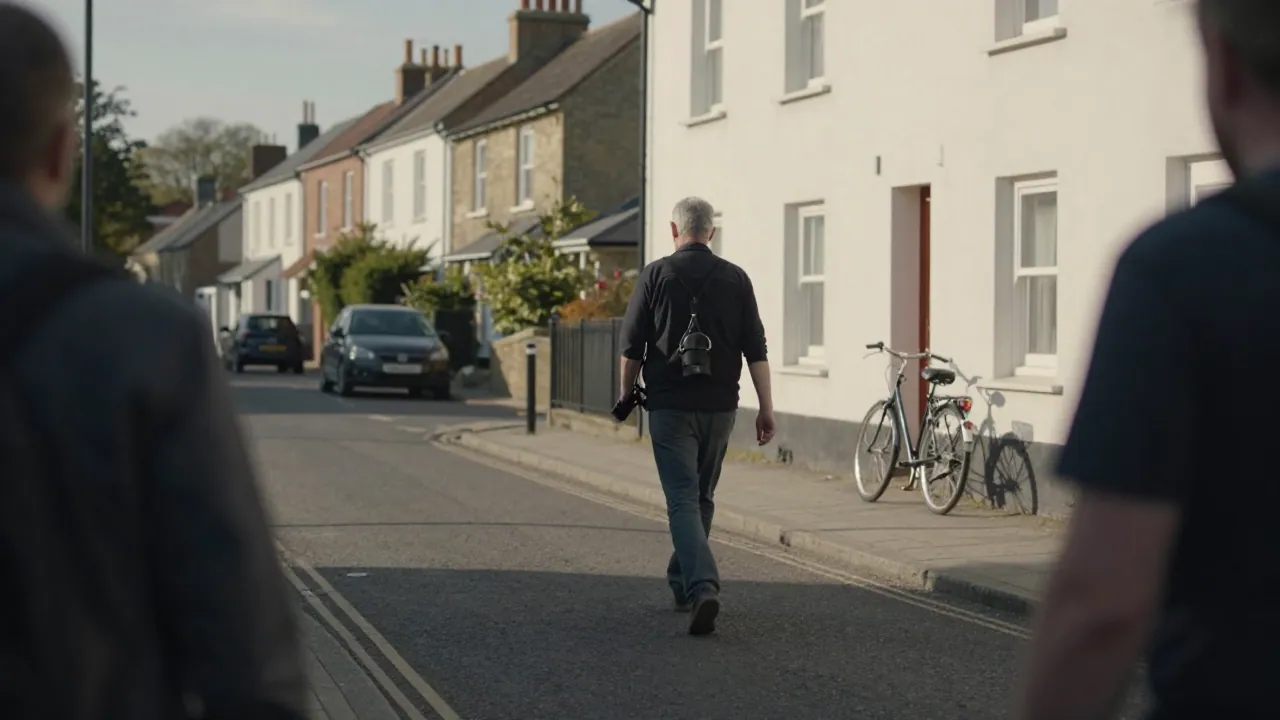
Some people come on one walk and we never see them again. Others turn up so often that they know the route better than we do. Derek is one of the second kind. He has been walking with us for a little over two years, usually on the town routes, and he almost always borrows a camera. I asked him to sit down with me after a Saturday walk in late autumn, once the light had gone and the tea had gone cold, to talk about pace, waiting and what he notices now. This is that conversation, edited lightly and printed with his permission. If you are new to the walks, our guide to loading your first roll is a good place to start.
Derek is retired, though he does not like the word, and he lives about twenty minutes from the town centre. He found us through a notice in a library window, which is still one of the ways people find us. He has borrowed most of our 35mm cameras at least once, and he has a favourite that he asks for by name. We talked for about an hour.
What keeps bringing you back?
It is the pace, mostly. I did a lot of walking before, but it was always walking to get somewhere. Here you walk to look. The first time I came, I thought we were going too slowly. Now I think we are going at exactly the right speed. There is no pressure to cover ground. You stop when something is worth stopping for.
The other thing is the camera. I would not have bought one myself. Borrowing one for an afternoon is a low-risk way to find out whether you like it. I found out that I do, but I still borrow rather than buy, because I like the routine of it. I turn up, I am handed a camera, I walk, I hand it back.
How does film change the walk?
It slows you down again, on top of the walking. You have thirty-six frames, so you cannot just fire away. You have to decide. And you cannot see what you have got until later, which I thought would annoy me. It does not. It means the walk stays with you for a few days. You find yourself thinking about a particular doorway or a bit of wall.
The waiting is the part I did not expect to enjoy. There is a gap between taking the picture and seeing it. In that gap, you are not judging yourself. You are just remembering. I think that is why people keep coming back. On a phone, you look at the picture immediately and move on. With film, the looking comes later, and it is better for it.
The waiting is not a delay. It is the part where the walk settles into you.
What do you notice now that you did not before?
Small things. The way paint peels on a windowsill. A sign that has been repainted but not quite in the same colour. The join between two paving stones where the tarmac has been patched. I used to walk past all of that. Now I stop. Not every time, but often enough that my walks take longer than they used to.
I have also got better at knowing when not to take a picture. That sounds odd, but it is true. Some things are better just looked at. The camera teaches you that too, because you only have so many frames. You learn to let some things go.
What would you say to someone thinking of coming for the first time?
Come on a town walk first. The coast is lovely, but the town is where the small details are. Bring nothing special. Wear shoes you can stand about in. And do not worry about the camera. Someone will show you how to load it, and if you are not sure, there is a guide that covers loading your first roll. The main thing is to come with no expectations of making great pictures. The pictures are almost a by-product.
The walks I remember most are not the ones where I got a good frame. They are the ones where it rained, or where we stood about for twenty minutes waiting for a cloud to move. One wet morning at the harbour wall sticks in my mind. Nobody took anything special, but we all stayed out. That is the kind of thing that keeps you coming back.
Has borrowing a camera changed how you feel about the town?
Yes, in a quiet way. I know the back streets better than I did. I notice when a shop changes hands. I have favourite bits of wall. It sounds daft, but the town feels more like mine now. I have spent time looking at it rather than walking through it.
It has also made me more patient with other people's pace. When you are waiting for someone to finish a frame, you have time to look around. You see what they are seeing, or you see something else. Either way, it is not wasted time.
What is next for you?
More of the same, really. I would like to try the coast walk in winter, when the light is low. I have not done that yet. And I would like to get better at photographing people, but from a distance, without them noticing. That is harder than it looks. For now, I will keep borrowing the same camera and keep turning up. It is a good habit.
We are glad he does. If you have been thinking about coming along, you can read about what we learned from our first year of camera loans, or just turn up on the day. There is no need to book, and no need to bring anything except sensible shoes.
Questions people ask
Do I need my own camera to join a walk?
No. We lend 35mm cameras and lenses to anyone who wants to try film. Just ask on the day, and we will show you how to load and use it.
How slow is a slow walk?
We stop often and we do not cover much ground. A town walk might be a mile or two over two hours. The pace suits looking rather than covering distance.
What happens to the film after the walk?
We develop it for you and bring the prints or scans to the next walk, or arrange a time to hand them over. There is no charge.