How to Load Your First Roll of 35mm Film Without Wasting It
A practical walk through loading a borrowed camera, from trimming the leader to checking the rewind tension, with the small mistakes that cost frames.
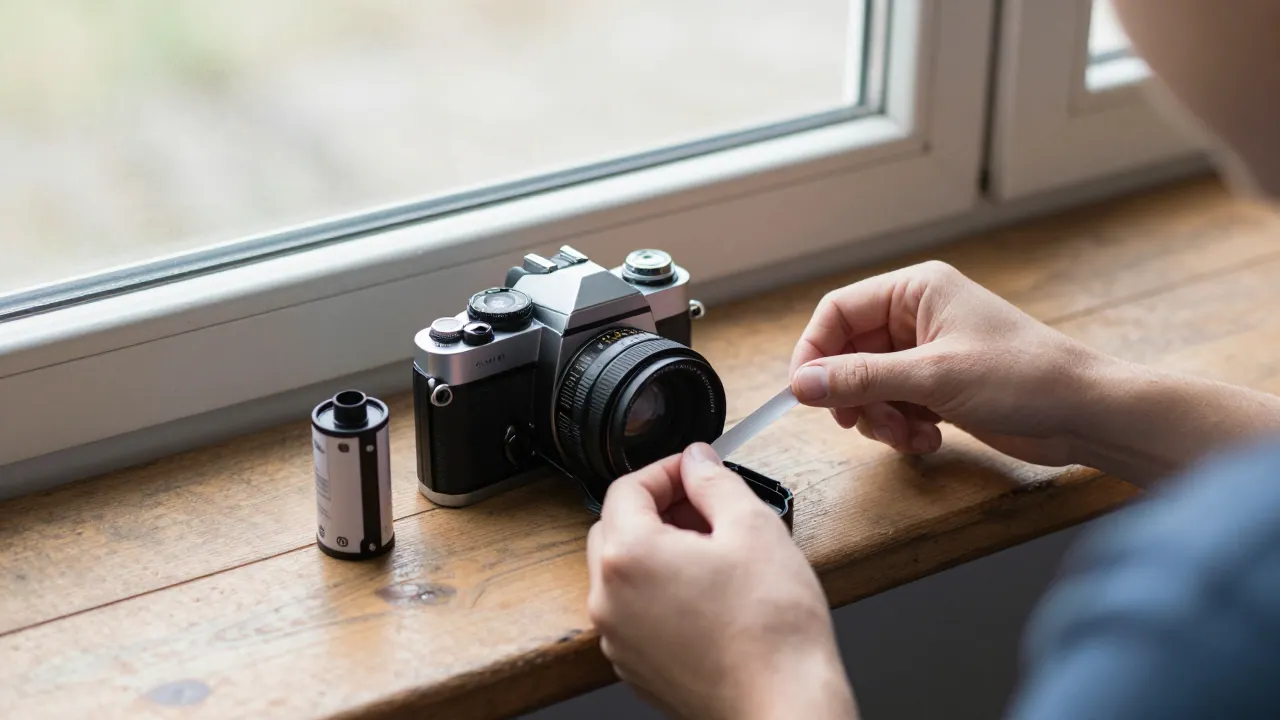
If you have borrowed one of our 35mm cameras and a roll of film, the first thing to do is load it properly. This guide is for anyone who has never loaded a film camera before, or who did it once in a hurry and lost the first few frames. By the end you will be able to open the back, thread the leader onto the take-up spool, check the sprockets are engaged, and close the camera knowing the film is advancing. It takes about five minutes in good light. We lend cameras precisely so people can learn this without buying anything, and the steps are the same on almost every manual body we hand out. If you are curious about why we bother, our notes on our first year of camera loans explain the thinking.
What you need before you start
You do not need much, but having it ready stops you fumbling with the camera open.
- A 35mm camera with a working back latch and rewind knob.
- One roll of 35mm film, still in its canister.
- Clean, dry hands and a shaded spot, or a table indoors.
- A pair of small scissors if the film leader is ragged.
- A notebook or phone note to record the film speed and the date you loaded it.
We hand out cameras with the film speed already set where we can, but always check. Write down the ISO and the frame count when you load, so you know what you have shot later.
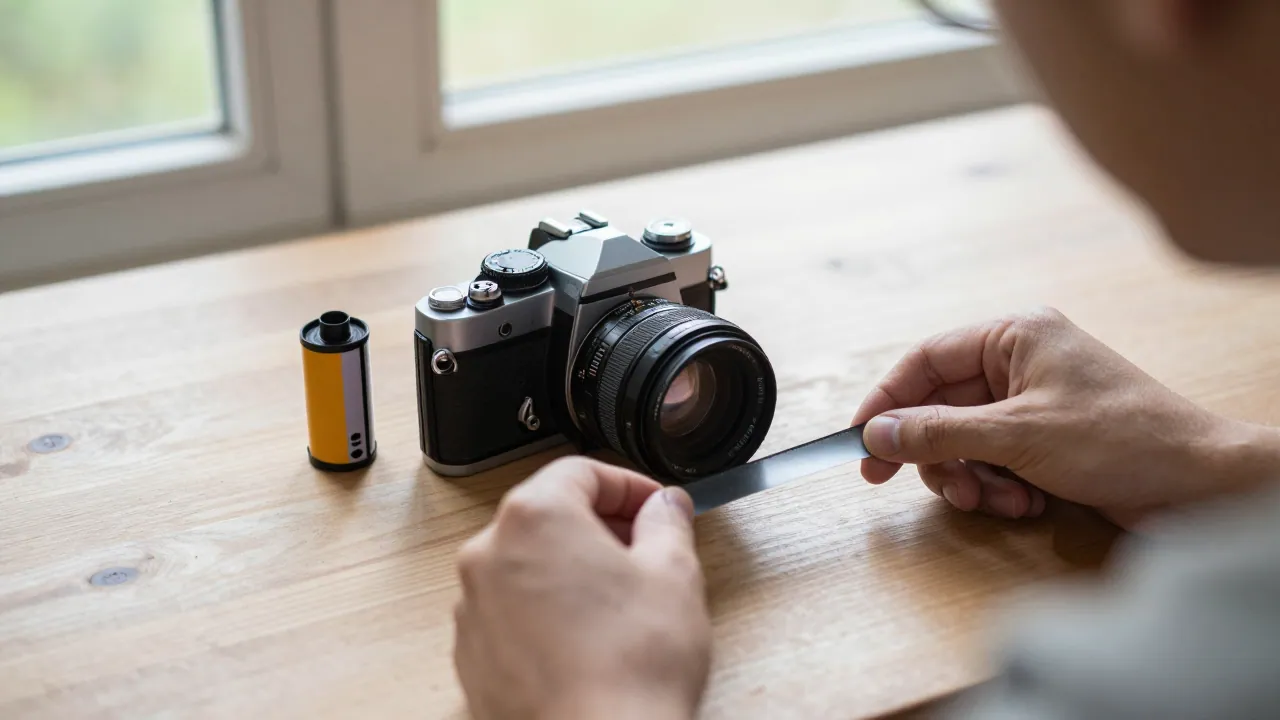
Step by step: loading the film
These steps suit the manual cameras in our loan cupboard, and most similar bodies. Go slowly. Nothing here needs force.
- Open the camera back. Press the latch or lift the rewind knob as your camera requires, and lay the camera down so the inside faces you.
- Pull the leader out of the canister. About 10 to 12 centimetres is enough. Hold the canister so the film does not spring back in.
- Trim the leader if it is torn or curled. A clean, slightly tapered end slides into the take-up spool more easily.
- Slot the leader into the take-up spool. On most cameras the spool has a slit or a hook. Push the film in until it catches, then give it a gentle tug to check.
- Drop the canister into its chamber. It should sit flat, with the spool spindle engaging the fork at the bottom.
- Check the film sits between the guide rails. It should lie flat across the film gate, not behind the rails or twisted.
- Engage the sprockets. Turn the advance lever slowly and watch the perforations drop onto the teeth on both sides. If they do not, lift the film slightly and try again.
- Close the back firmly. You should hear a click. Do not force it; if it resists, the film is not seated properly.
- Advance two frames and watch the rewind knob. The knob should turn as you advance. If it does not, the film is not caught on the take-up spool. Open the back in shade and start again.
- Set the film speed and note the frame count. Most cameras start at frame one after two blank advances. Write down the ISO and the date.
The small mistakes that waste a roll
Most ruined first rolls we see are not ruined by the camera. They are ruined in the first minute of loading. These are the ones that come up again and again at our walks.
| Mistake | What happens | How to avoid it |
|---|---|---|
| Leader not caught on the spool | The film never advances; you shoot nothing | Tug gently after slotting; watch the rewind knob turn |
| Sprockets not engaged | Film bunches or tears; frames overlap | Advance slowly and watch the perforations drop onto the teeth |
| Back closed on a twisted film | Film jams or scratches; the back may not latch | Check the film lies flat between the rails before closing |
| Loading in bright sun | First two or three frames are fogged | Turn your back to the sun or step into shade |
| Forgetting to set the ISO | Wrong exposure for the whole roll | Set the film speed before you close the back |
| Opening the back mid-roll | Everything you have shot is fogged | Only open the back when the film is fully rewound |
One more: do not wind on past the first frame with the lens cap on and assume it is broken. The shutter may be quiet, but the rewind knob is the honest signal. If it turns, the film is moving.
After the last frame: rewinding
When the advance lever stops or the frame counter reaches the end of the roll, do not force it. Press the small rewind button on the base of the camera, then turn the rewind crank in the direction of the arrow. You will feel the tension ease as the film leaves the take-up spool. Keep going until it goes slack, then open the back and lift out the canister. If the leader is fully wound inside, ask us to retrieve it rather than poking around with a tool. The camera stays happier that way.
If you are not sure whether the film advanced at all, bring the camera to a walk and we will check it with you. The habits are easier to learn once than to correct later, which is part of why we lend cameras rather than simply hand out instructions. Our regular walkers often say the slower pace of film suits a slow town walk, as one of them told us.
A few habits worth keeping
Load in the same order every time: open, slot, check rails, engage sprockets, close, advance, watch the knob. The repetition is what makes it quick. Keep the empty canister in your pocket so you remember what was in the camera. Note the film speed and the date, especially if you are shooting across several walks. And if the camera does something unexpected, stop and look before forcing anything. Most problems are a film that is not seated, not a broken mechanism.
We see a lot of first rolls at the harbour wall on wet mornings, and the same small errors come up. A wet morning at the harbour wall is a good reminder that the light and the loading both reward a little patience.
Questions people ask
How many frames do I lose when loading?
Usually two, sometimes three. The first advances are blank by design, so the film is safely wound on before frame one. If you load in bright sun, add a frame or two of fogging to that count.
What if the rewind knob does not turn?
The film is probably not caught on the take-up spool. Open the back in shade, check the leader is slotted in, and try again. Do not keep advancing, as the film may bunch inside the camera.
Can I load film outdoors on a walk?
Yes, but turn your back to the sun or stand in the shade of a wall. Direct sun on an open back can fog the first frames. Wind and grit are the other things to watch, so keep the camera low and close.