A Wet Morning at the Harbour Wall: Notes on Light and Slow Film
Rain, sea mist and a decision to load 100 ISO instead of 400 — what an October walk along the coast taught us about metering and patience.
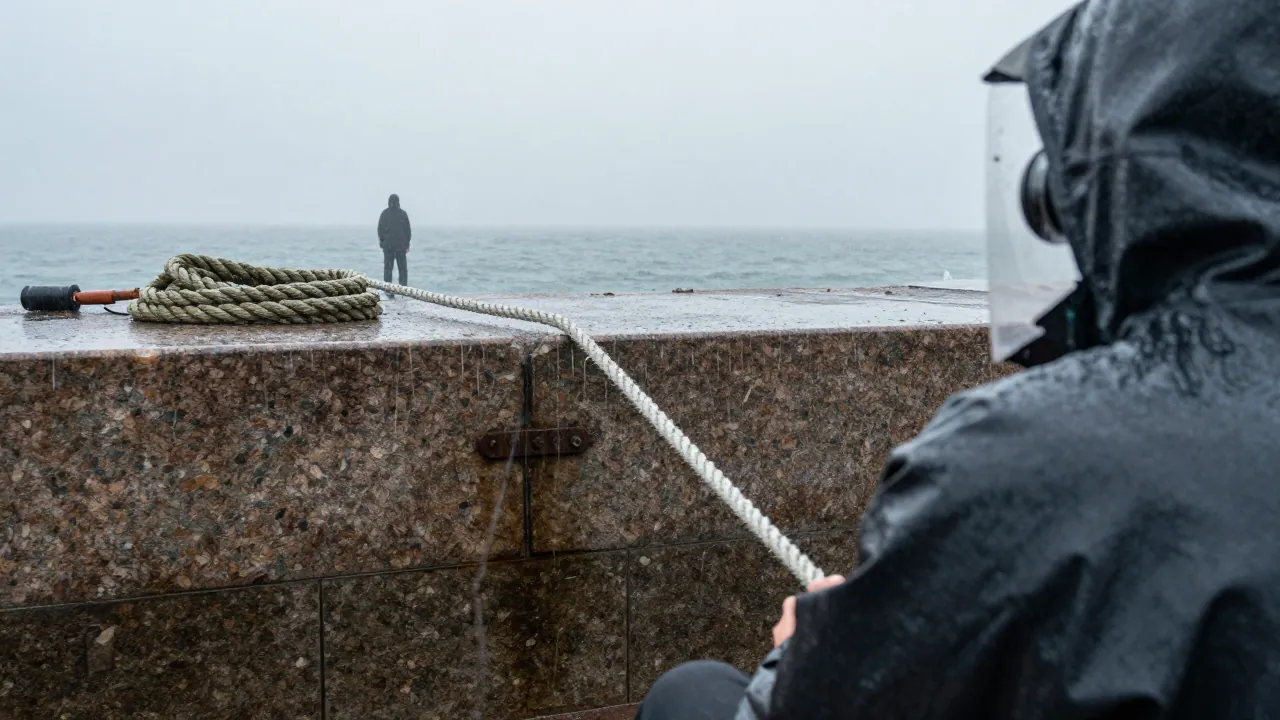
We met at the harbour wall on a Saturday in October with rain running off the awnings and a forecast that promised it would clear by noon. It did not clear. Nine of us stood under the lee of the fish market, cameras tucked inside jackets, watching the sea lose its horizon to a soft grey haze. The plan had been 400 ISO film and quick exposures between showers. Within twenty minutes we had changed our minds, and the morning became a lesson in shooting slower than we intended — and looking harder because of it. If you are new to any of this, the morning also showed why it helps to load your first roll before you leave the house.
Arriving in the rain
The harbour wall runs east to west, so the wind was coming at us sideways. We gathered by the old capstan, where the wall gives a little shelter, and Ruth handed out a simple checklist: wipe the lens, keep the camera under your coat, and do not change film in the open. Two people had brought cameras they had borrowed from us the week before, and both were relieved to find the loading could wait until we reached the stone shelter at the far end.
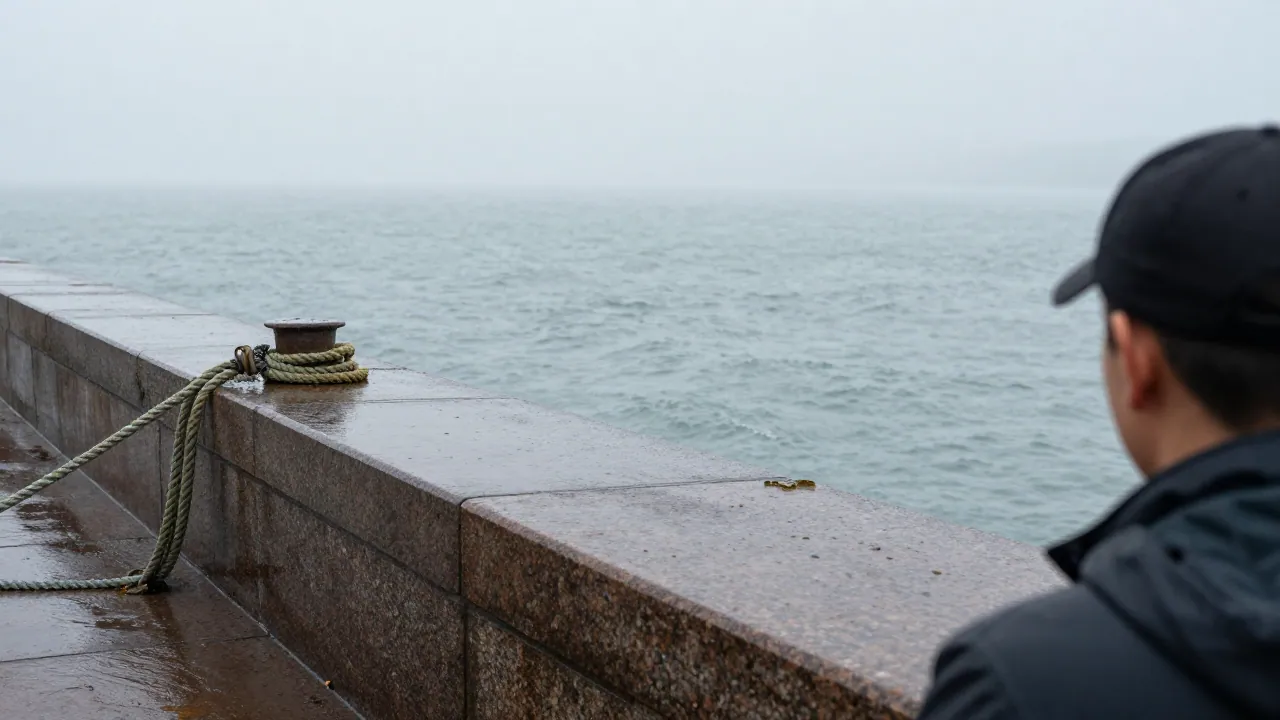
We walked the length of the wall in twos and threes, stopping whenever something caught an eye: a rope coil, a gull on a bollard, the way the rain made the granite look almost black. The light was flat and even, which sounds dull but is actually kind to beginners. There were no hard shadows to trip you up, and the sky acted like a huge softbox.
Why we shot slower film
The original plan was 400 ISO, which is our usual choice for a British coast in any season. But the mist was so thick that the contrast was low, and several of us had brought 100 ISO by mistake or by habit. Rather than swap, we decided to use it and see what happened. The slower film meant wider apertures and slower shutter speeds, which in turn meant we had to think about movement: waves, flags, people walking. It slowed the whole morning down.
We metered for the brightest part of the sky and then opened up a stop and a half, which is a rough rule we use on grey days. Ruth kept a notebook of exposures — frame number, shutter speed, aperture, and a word about the scene. That notebook became the most useful thing we carried. Later, comparing frames, we could see exactly what a difference half a stop made. It is the same habit we recommend in our guide to metering on a bright coast, though the principle works in rain too.
What we packed and what we learned
By the time we reached the shelter, everyone was damp but cheerful. We pooled our kit on a dry bench and talked through what had worked. The list below is what we will bring on every wet walk from now on.
- A small microfibre cloth in a zip pocket, not loose in a bag.
- A plastic bag large enough to cover the camera while changing film.
- A notebook and pencil — ink runs in the rain.
- A spare roll of the same film, so you are not tempted to change ISO halfway.
- A flask, because standing still in October is colder than walking.
One moment worth remembering: halfway along the wall, the rain eased and a weak sun came through for perhaps two minutes. The wet stones lit up, and everyone stopped talking. We took maybe six frames between us. Then the mist closed in again. It was a good reminder that on the coast you are always shooting the weather, not just the place. Priya, who has walked with us since the spring, put it well afterwards when she talked about why film suits a slow town walk — the pace and the waiting are part of it.
The rain made us look at small things. Nobody was chasing the big view, so we all came back with pictures of ropes and railings and puddles. I think that is a better morning, honestly.
What happens next
Our next walk is planned for the second Saturday in November, starting at the same harbour wall but taking a shorter route inland if the weather turns. We will bring the wet-weather kit list above and a few spare 100 ISO rolls for anyone who wants to try slower film. We are also keeping the exposure notebooks from this walk so we can compare notes at the start. If you borrowed a camera from us this year, the loan notes are in our piece on what we learned from our first year of camera loans.
Questions people ask
Do I need my own camera for a wet walk?
No. We lend 35mm cameras and lenses on the day, and we bring a few spare rolls of film. If you borrow a camera, we will show you how to load it and how to keep it dry in the rain.
What film should I bring if it is raining?
We usually suggest 400 ISO for grey days, but this walk showed that 100 ISO can work well if you are happy with slower shutter speeds. Bring one film and stick with it, so your exposures stay consistent.
Will the walk be cancelled in bad weather?
We walk in most weather, including rain. If the wind is very strong or the harbour wall is unsafe, we move the route inland and put a note on our website the evening before.