A Small Camera Bag for a Winter Coastal Walk
What we carry on a cold, windy shingle shore, from lens cloths to a spare roll, and why less kit makes for calmer pictures.
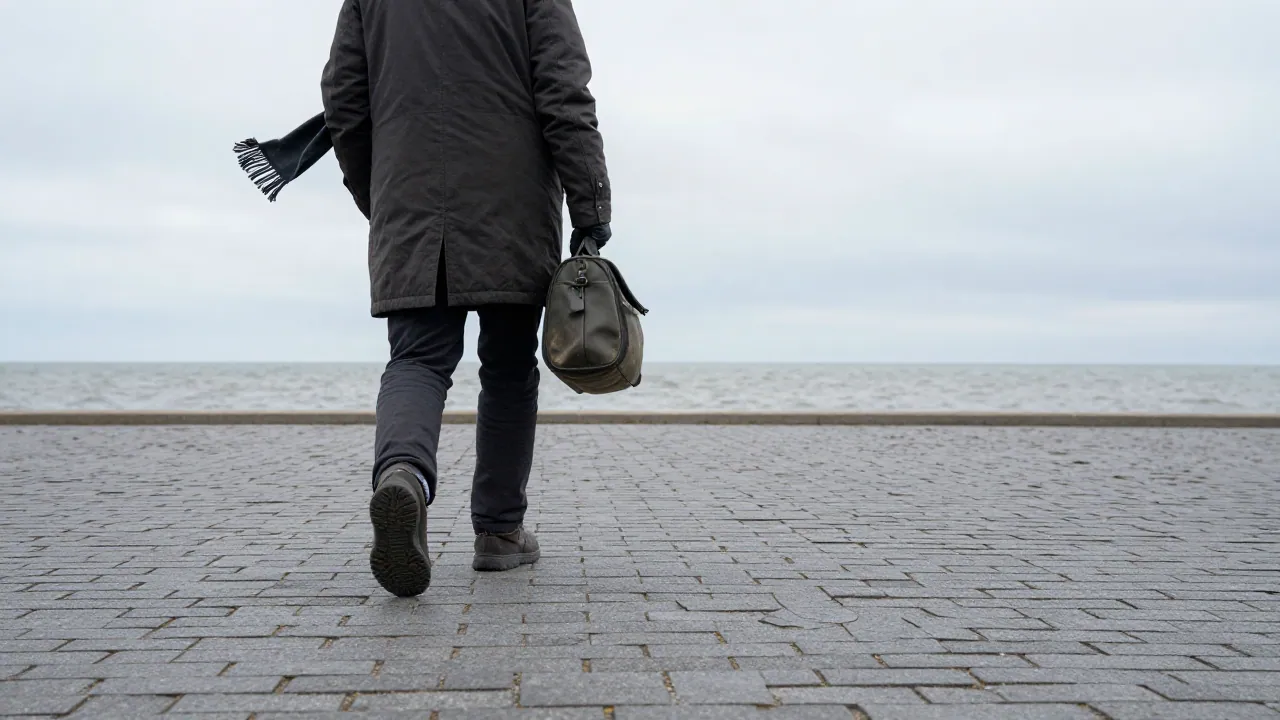
We walk the coast in winter because the light is low and the beaches are empty. reactoonz online casino But cold hands and salt spray are hard on cameras, and a heavy bag slows you down. Over several seasons of walks along shingle shores, we have settled on a small kit that fits in one shoulder bag. This guide is for anyone joining a winter walk, or heading out alone with a 35mm camera. You will find what we pack, how we pack it, and why carrying less helps us see more. If you are new to film, start with our notes on loading your first roll before you add anything else.
Who this guide is for
This is for anyone coming on one of our winter walks, or planning a solo trip along a shingle beach with a 35mm camera. You do not need special equipment. You need a bag you can carry all day, a camera you trust, and a way to keep the wind off your hands. By the end, you will know what to put in the bag, what to leave at home, and how to work quickly when the light changes.
We have led walks in January and February when the wind came straight off the sea and the shingle shifted underfoot. The kit below is what we actually carry on those days. It is not a list of everything you might need. It is a list of what earns its place.
What we carry
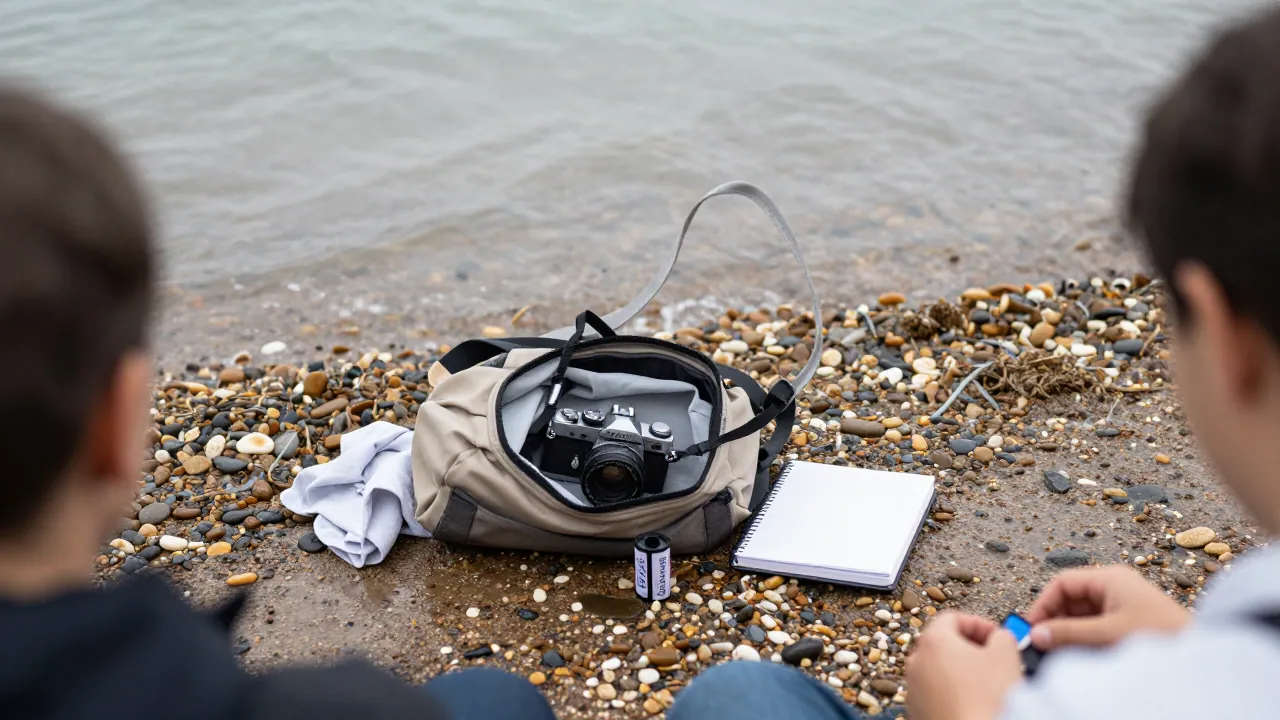
We start with one camera body and one lens. On a coastal walk that is usually a 35mm or 50mm prime. A zoom adds weight and another thing to think about. One focal length keeps your eye working. If you are borrowing a camera from us, it will come with a standard lens, and that is all you need.
- One 35mm camera body with a strap you trust
- One lens, usually 35mm or 50mm
- Two lens cloths in a plastic bag, one for the lens and one for your hands
- A spare roll of film in a case or pocket
- A small notebook and pencil for exposure notes
- A lightweight rain cover or a plastic bag for the camera
- A warm hat and gloves that let you use the controls
- A flask and something to eat
The notebook matters more than people expect. On a bright coast the meter can be fooled by the sea and sky. We write down the frame number, the shutter speed, and what the light was doing. Later, when the negatives come back, the notes help us learn. Our article on a wet morning at the harbour wall shows how those notes pay off.
If you are new to borrowing kit, our piece on what we learned from our first year of camera loans explains how we look after the cameras and what we ask of borrowers.
How to pack the bag
Pack in the order you will use things. The camera goes on top, ready to shoot. The spare roll goes in an outside pocket where you can reach it with gloves on. Lens cloths go in a sealed bag so they stay dry. The notebook goes in a pocket you can open without taking the bag off your shoulder.
- Lay everything out and remove anything you have not used on the last three walks.
- Put the camera and lens in the main compartment, lens cap on, strap outside the bag.
- Put the spare roll in an outside pocket, not loose in the bottom.
- Put the lens cloths in a small sealed bag and keep one in your coat pocket.
- Put the notebook and pencil in a top pocket you can reach without looking.
- Add a rain cover or plastic bag, then close the bag and lift it onto your shoulder.
- Walk around the room. If it feels heavy, take something out.
A shoulder bag is easier to work from than a backpack on a beach. You can swing it round without putting it down on the shingle. If the wind is strong, keep the bag in front of you when you open it, so nothing blows away.
What we leave at home
We leave the second lens at home. We leave the tripod at home unless we know we will be shooting in low light at the end of the day. We leave the filters at home except for one skylight filter that stays on the lens for protection. We leave the flash at home. We leave the spare camera body at home.
This is not a rule for everyone. It is what works for us on a windy shore. Fewer choices mean fewer decisions, and fewer decisions mean more attention to the light. If you are used to carrying more, try one walk with less and see how it feels. Our regular walker Priya talks about this in her conversation about film and slow town walks.
| Item | Why we carry it | Where it goes |
|---|---|---|
| Camera and one lens | One choice, quick to use | Main compartment |
| Spare roll | Wind or cold can slow loading | Outside pocket |
| Lens cloths | Salt spray and rain | Sealed bag, one in coat |
| Notebook | Record exposure and light | Top pocket |
| Rain cover | Sudden squalls | Main compartment |
| Flask | Warmth on a long walk | Side pocket |
Common mistakes
The most common mistake is packing too much. A heavy bag makes you tired, and tired photographers stop seeing. The second is not protecting the lens from spray. Salt is hard on glass, and a wet cloth just smears it. The third is loading a new roll in the wind without shelter. Find a wall or a doorway, or turn your back to the wind. And if you are waiting out a squall in a café, a few minutes on reactoonz online casino on your phone is a harmless way to pass the time before the light returns.
Another mistake is not noting the exposure. When the sun comes out on a bright coast, the meter can read the sea and underexpose the shore. Write down what you did, and compare it with the negatives later. That is how we learn.
A calmer way to work
When the bag is small, the walk is simpler. You stop, you look, you take one frame, and you move on. The coast in winter does not give you many chances, so the ones you take matter. That is what we mean by calmer pictures. It is not about being slow for its own sake. It is about being ready.
Questions people ask
Do I need a tripod for a winter coastal walk?
Usually no. We leave the tripod at home unless we plan to shoot at dusk. A fast film and steady hands will cover most winter light. If you do bring one, keep it light and strap it to the outside of your bag.
How do I keep my lens clean in sea spray?
Carry two lens cloths in a sealed bag. Use one to wipe the lens and keep the other dry. Do not use a cloth that has been in your pocket. A skylight filter on the lens also helps protect the glass.
What film should I bring for a windy, bright coast?
A 400 ISO film is a good all-round choice for winter. It copes with cloud and lets you shoot at a reasonable shutter speed. If the sun is bright, a 200 ISO roll will give you finer grain. Bring one spare roll.